

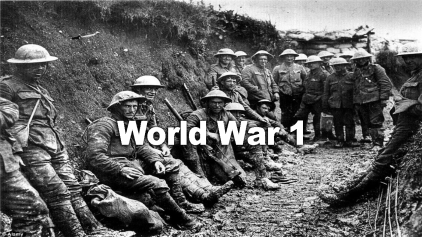
‘The Great War’ (World War One) had exhausted both the actual population of Europe as well as cultural and spiritual vitality – and Eliot’s Waste Land captured this listlessness of life and loss of meaning. The first of five sections of the poem, ‘The Burial of the Dead,’ thus opens with the imagery of a grave site, though ironically yet suggesting signs of life, however dreary:
April is the cruelest month, breeding
Lilacs out of the dead land, mixing
Memory and desire, stirring
Dull rooms with spring rain.[1]
Eliot brings to light the tired spirit following such massive amounts of death which, ironically enough, were often made possible by such human inventions as machine guns and gas warfare. In his own way, Eliot follows Romantic poets such as Wordsworth and Samuel Taylor Coleridge from a full century before who sought to rehabilitate the imagination in the face of a dehumanizing urbanization and industrialization.[2] But Eliot’s poetry spoke to the monumental collapse of confidence in the progress of civilization brought about by WWI. The steady march of progress and attendant optimism of the Victorian nineteenth century found poetic expression in the 1902 Coronation Ode for King Edward VII of England:
Land of Hope and Glory, Mother of the Free,
How shall we extol thee, who are born of thee?
Wider still and wider shall thy bounds be set;
God, who made thee mighty, make thee mightier yet[3]





 Welcome to Narnian Frodo